
Mechanical Diagnostics
Troubleshooting vintage Arctic Cat systems has developed my systematic problem-solving skills and technical patience.
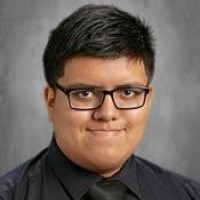
Computer Engineer-in-Training
Building Resilience: My Evolution into a Systems Architect
For a long time, I saw technology as just a career; a field where I could work on interesting systems, earn a stable income, and eventually "get out" when the job was done. My relationship with my homelab was modular; I focused on solving individual problems without seeing the larger picture. However, as I began my Integrated Systems Intensive, everything changed. I realized that my interest wasn't in just maintaining systems for others, but in becoming the architect behind the products themselves. This shift in mindset led me to embrace the challenge of higher education at the University of Wisconsin-Madison, where I intend to master the intersection of hardware and software.
This journey has already pushed me into the core of digital logic. My most challenging and rewarding project to date is designing a custom BCD (Binary-Coded Decimal) to 7-segment display circuit from the raw mathematical foundation upward. Expanding the architecture to fully support hexadecimal, I mapped out the truth tables, drafted the physical character geometries, and constructed Karnaugh maps to systematically simplify the Boolean algebra. Stepping away from higher-level software abstraction to engineer a circuit at the gate level has completely transformed how I view hardware optimization.
The raw grit required to sustain this level of engineering focus was forged through intense physical labor. Working demanding shifts inside industrial manufacturing silos taught me the true meaning of discipline and environmental endurance. Managing complex logistics under harsh, high-pressure structural conditions requires a relentless work ethic. This industrial stamina translates directly to my engineering; when you have survived the grueling reality of silo production, staring down a broken codebase, debugging hardware registers, or tracking a system failure doesn't intimidate you; it just becomes another environment to master.
My work ethic is also rooted in my cultural heritage from Veracruz and Oaxaca. Watching the perseverance of my family (Castellanos, Cruz, and Portugal) motivates me to build infrastructure that is durable and resilient. This is further reinforced by my interest in urban exploration; documenting the ruins of old industrial sites reminds me that engineering has a lifecycle, and we must design our future systems to withstand the test of time.
As I prepare for the rigors of UW-Madison, my goal is to master semiconductor manufacturing and hardware-software integration. My path has taught me that I am capable of architecting complex systems, and I am ready to transition from a student in a lab to a professional architect shaping the future of technology.
Bridging Theory and Practical Application
Troubleshooting vintage Arctic Cat systems has developed my systematic problem-solving skills and technical patience.

Exploring abandoned industrial areas provides perspective on engineering lifecycles and historical system resilience.

Managing my 6-node enterprise cluster (Vardhana Labs) is where I apply advanced virtualization and network logic.
Master Computer Engineering at the University of Wisconsin-Madison with a specialized focus on semiconductor manufacturing. My goal is to create a RISC-V 32 bit CPU before I enter Madison.
Action Plan: I will work vigorously on learning circuit deisgn and SystemVerilog to be able to create my final project by the end of August.